Posts

Showing posts with the label Traditions

SA Interviews: The miniature wonders of Kangra by Mayank Singh

Image
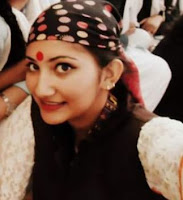
Mayank Singh is an Intern at Speaking Archaeologically "At a numaish (exhibition) hosted by the King of Chamba", she begins, "When all the artists were boasting about their skills,one of my family's ancestors painted 100 elephants on a single thread of Dhake ke malmal (fine cotton muslin from Dhaka)." Mrs Nisha Raina tells me this and many tales in the hour-long conversation I had with her. In this article, I have tried to include and summarise all that I could learn about Kangra paintings from the interview. Mrs Raina was born into the family of Raina Brahmins, who migrated from Kashmir and settled in Mangloti village of Kangra around the same time the Mughal Empire collapsed. This spree of migration induced a new blend of the M ughlai miniature paintings and the theme of lustrous green landscapes of the hill states, whose Rajput rulers offered patronage to these migrants. Thus was born-what is now known in history as- the Kangra paintings. Mrs Nis...
First On-Site Visit : Bhima Devi Temple, Pinjore by Priyanshu Mehta

Image
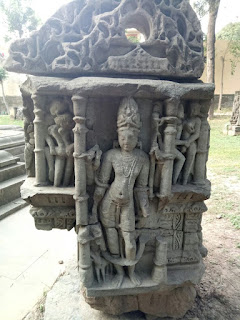
What comes to your mind when I talk of an Archaeological recording workshop? A formal site visit led by a regimented Task In-charge?   If yes, then let me help you get rid of this preconception. Because the Speaking Archaeologically site visits are nothing like that. On the fine Sunday morning of 15th October,  I embarked on the bus journey from Chandigarh to Pinjore. Though I had visited the place before, but never knew there was a temple too. Anyway, it was a 45 minute long journey and I spent the whole time trying to wrap up the essay we had to submit the same day. I reached there by noon as we all were supposed to, where Shriya greeted us all warmly (See, what did I say? No formalities). We walked further, got onto the site, had a session on Hindu temples and conferred about them in detail. Studied Hinduism in its primary form, discussed Tantra, Mantra and Yantra, familiarized ourselves with different Gods, including the one pictured below. That's Ishana (Moon)...

SA Culture Diaries: Diwali in Sikhism by Tarannum Caur, Nimrat Dhillon and Gursahiba Gill

Image
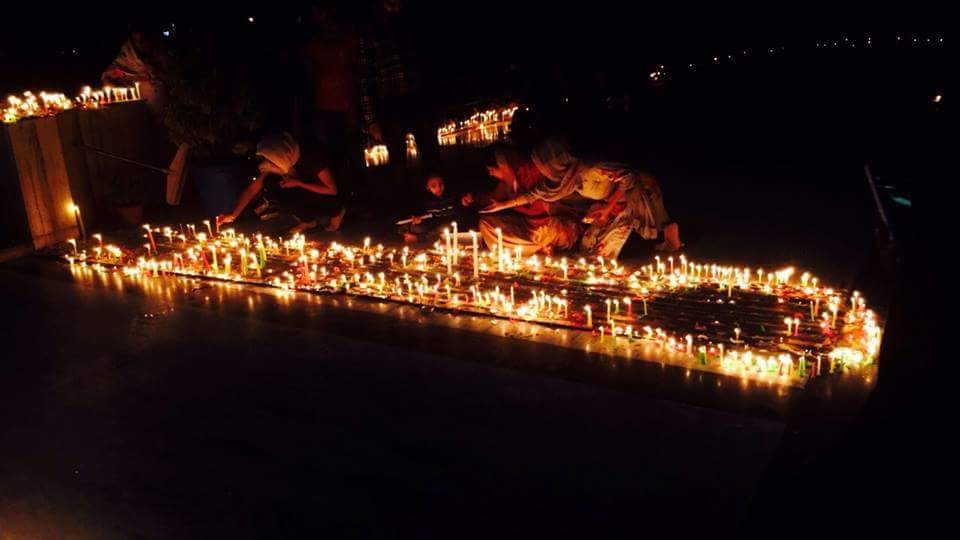
“On a dark moonless night in autumn, I see a nation adhere to its ancient custom. to celebrate the deity of success and prosperity, by thanking their almighty.” - Sulaiman Sait Year in and year out, every year Diwali becomes the most anticipated festival in a country where people get together in order to celebrate the victory of light(brightness) over the dark. A festival where people of all cultures in this secular country get together and share happiness under a dark sky lit up with happiness and celebrations. Diwali is predominantly a Hindu festival but it also finds extreme importance in Sikhism. Historically, Sikhism struggled under the regime of Mughal rulers due to various reasons. On the day of Diwali, the Sixth Guru, Guru Hargobind Ji and 52 other kings were released from the prison of Gwalior. After Jahangir found out that Guru Hargobind Ji was innocent and harmless, he ordered his release. 52 Rajas who were also imprisoned in the fort as hostages for opposing th...

SA Culture Diaries: The Jammu Dogra Diwali by Athira Jamwal

Image
Diyas or Earthen Lamps Diwali also called the Festival of Lights  is celebrated to honour Ramachandra, who is supposed to be the seventh avatar (incarnation of the Puranic God Vishnu). According to the Great Epic, Ramayana it is believed that on this day Lord Rama returned to his people after 14 years of exile during which he fought and won a battle against the demons and the demon king, Ravana. People lit their houses to celebrate his victory over evil (light over darkness).The Suryavanshi clan (Descendants of the Sun) of the Dogras celebrate Diwali as a reminder of the victory of their supposed ancestor Lord Rama. Diwali in Dogra culture is celebrated in almost the same manner as the rest of India. Great significance is given to Goddess Lakshmi ( The goddess of wealth and fortune) and Lord Ganesha, the Lord of auspicious beginnings and prosperity. Marigold garlands on the thresholds  The preparations for Diwali begins a week prior to the festival....

SA Culture Diaries: Diwali in the Hills by Shaurya Negi

Image
Volunteer Shaurya Negi in Traditional Himachali Attire Hailing from the mountains of the Devbhoomi, or Himachal Pradesh as the world popularly knows it, I have been lucky enough to be a part of different festivals celebrated in different ways.Among these festivals is Deepawali. Despite the world moving at a fast pace, Himachal Pradesh has not forgotten its varied traditions when it comes to celebrating Deepawali. Districts like Kullu, Manali, Shimla, Mandi have had the most magnificent rituals involved in celebrating Diwali. Looking at and growing up learning the different traditions,I've been able to gather the different colours and customs of celebrating Diwali in the upper areas of Shimla, the state capital and remarkably the most religiously significant city. Shimla popularly known for its tremendous history of Devi-Devtas has its own traditions especially found in upper areas like Kotkhai, Rohru, Jubbal, Balsan, Chopal, Theog and Kotgarh. Diwali is not only a festiv...